Reimagining Education for Sustainable Development: A Call to the Generations Shaping Tomorrow
🌍 “We do not inherit the earth from our ancestors, we borrow it from our children.” – Native Proverb
In a world defined by climate disruption, artificial intelligence, social inequality, and digital transformation, education must evolve—or risk becoming irrelevant. Today’s learners are not just passive receivers of knowledge. They are innovators, disruptors, and changemakers. And tomorrow’s learners must be equipped to do even more.
This is a call not only to Gen Z, who are now stepping into leadership roles, but also to Gen Alpha, the next generation rising through the education system. Together, you are the ones who will shape the trajectory of our planet.
We must reimagine education—not as a rigid system, but as a living, breathing force for sustainability and justice. This is the heart of Education for Sustainable Development (ESD).

🧭 What Is ESD, Really?
Education for Sustainable Development (ESD) isn’t about adding another subject to your school schedule. It’s about transforming the way we think, learn, and act—at every age and every stage.
ESD is a philosophy that:
-
Encourages you to connect the dots between environment, economy, and society.
-
Empowers you to tackle real-world problems with empathy and innovation.
-
Equips you with lifelong values like equity, resilience, and critical thinking.
Whether you’re creating content, leading a project, or raising your first child—ESD is a mindset for a better world.
👶👦👩🎓📊 A Quick Look at Generational Timelines
| Generation | Birth Years | Current Age (2025) |
|---|---|---|
| Baby Boomers | 1946 – 1964 | 61 – 79 years old |
| Generation X | 1965 – 1980 | 45 – 60 years old |
| Millennials (Y) | 1981 – 1996 | 29 – 44 years old |
| Generation Z | 1997 – 2012 | 13 – 28 years old |
| Generation Alpha | 2013 – ~2029 | 0 – 12 years old (and growing!) |
🟢 Gen Z: You are the now—young professionals, university students, influencers, and leaders in training.
🔵 Gen Alpha: You are the next—today’s learners and tomorrow’s decision-makers.
Both generations are uniquely positioned to reshape education, society, and sustainability from the ground up.

🔥 Why ESD Matters More Than Ever
The challenges facing your generation(s) are nothing short of epic:
-
Climate breakdown is threatening food, water, and health systems.

-
AI and automation are rewriting the rules of work and ethics.

-
Misinformation is distorting truth and weakening social cohesion.
-
Youth mental health is under serious pressure.
-
Ecological collapse is accelerating with little time to reverse it.

But with these crises come opportunities for bold, innovative solutions—driven by your ideas, your voices, and your actions.
🌱 A Blueprint for Ideal ESD Implementation
1. Learning from the Cradle to Career
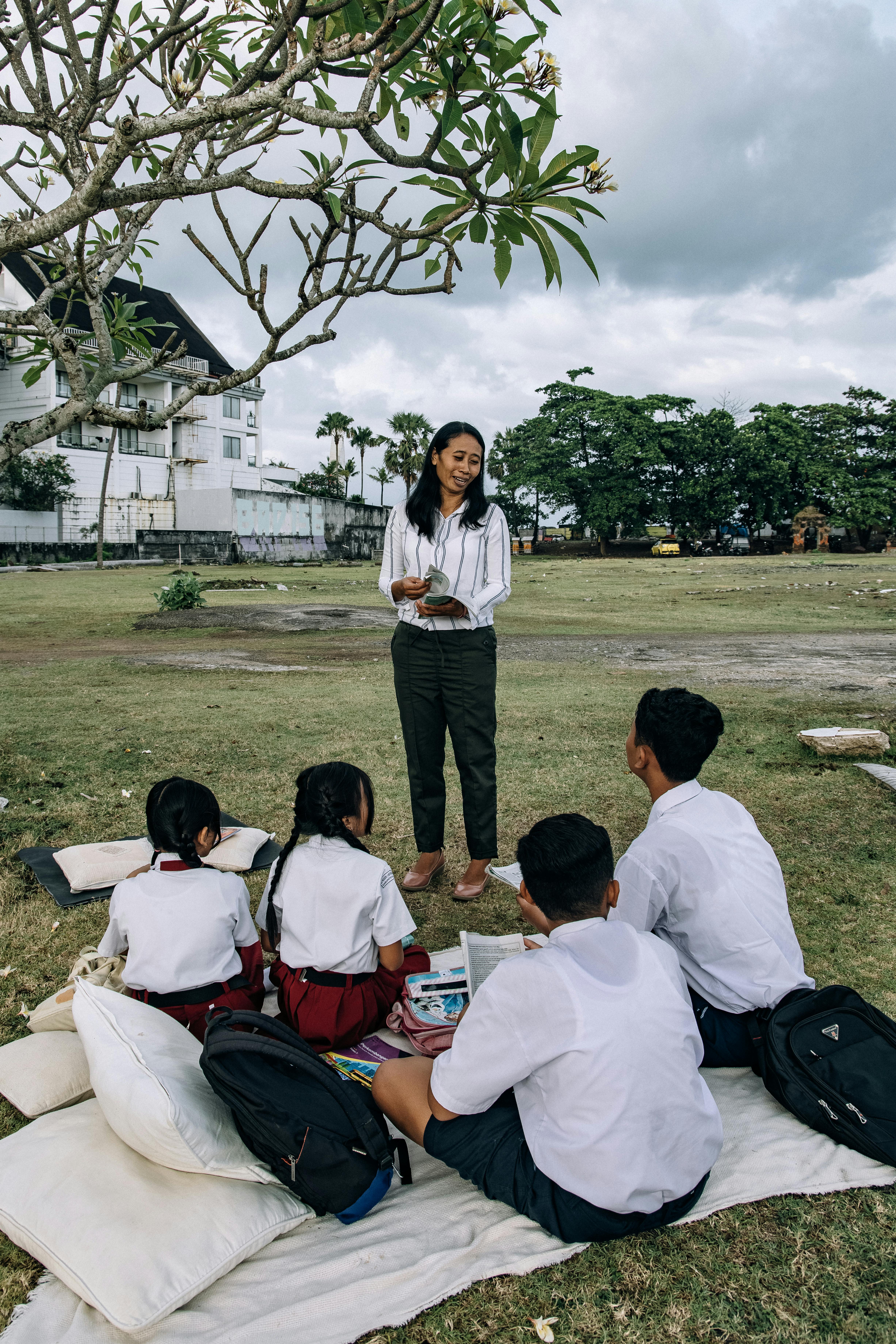
From early childhood storytelling to postgraduate research, ESD must be embedded at every stage:
-
In kindergartens, nurturing care and connection with nature.
-
In schools, encouraging systems thinking and ethical reasoning.
-
In higher education, fuelling innovation and community solutions.
-
In workplaces, offering reskilling and purpose-driven career paths.

2. Beyond Classrooms: Learning Everywhere
Learning doesn’t stop with a diploma. It happens:
-
At home—through everyday conversations and habits.
-
Online through meaningful digital content and activism.
-
In communities, through civic engagement and cultural practices.
3. ESD in the Age of AI
Artificial intelligence is changing everything, from climate modelling to job automation. But who decides how AI is used? You do.
ESD must prepare you to:
-
Question AI ethics.
-
Understand tech’s social/environmental impact.
-
Use innovation for good—not just profit.

🛠 How You (Yes, You!) Can Lead the ESD Movement
Whether you’re a 10-year-old learning about plastic pollution or a 25-year-old managing a tech startup, your choices matter. Here’s how to live ESD:
-
🌿 Stay curious: Ask questions that connect people, planet, and policy.
-
🔍 Be critical: Challenge the systems that are no longer working.
-
💬 Use your voice: Speak up in class, on social media, or in your workplace.
-
🤝 Collaborate: Work with peers, teachers, families, and communities.
-
💡 Act small, think big: Daily sustainable habits build long-term change.
🎓 A Word to Educators, Institutions, and Parents
You hold the keys to shaping how the next generation learns. But ESD is not about adding more content, it’s about changing the lens.
Make sustainability the context for everything: maths, history, art, design, and business. Build learning environments that:
-
Inspire reflection and action.
-
Encourage failure as part of growth.
-
Foster love for the planet, not fear of it.
📚 Want to Learn More? Start Here:
Here are 10 powerful references to deepen your understanding of ESD:
-
UNESCO (2020) – Education for Sustainable Development: A Roadmap
-
Sterling, S. (2010) – Transformative Learning and Sustainability
-
Barth, M. et al. (2007) – Key Competencies for SD in Higher Ed
-
Tilbury, D. (2011) – UNESCO Review on Learning for ESD
-
Wals, A. E. J. (2011) – Learning Our Way to Sustainability
-
Leicht, A. et al. (2018) – Issues and Trends in ESD
-
McKeown, R. (2002) – ESD Toolkit for Educators
-
Nolet, V. (2009) – Teacher Preparation for Environmental Literacy
-
Bormann, I. (2013) – ESD in German Schools: A Case Study
-
Lotz-Sisitka et al. (2015) – Transgressive Learning in Higher Education
✨ Final Words
Dear Gen Z and Gen Alpha:
You are not just future leaders. You are current change agents. ESD is not just about saving the planet; it’s about creating a fairer, wiser, and more beautiful world together.
Don’t wait for change. Learn to lead it. Live to create it.
The future isn’t written yet. And education—when aligned with purpose, just might be our greatest tool to write a better one.