My Personal Preferences in Choosing Halal Food – A Personal Guideline
Disclaimer
This post reflects my personal preferences and principles in selecting halal food. It is not intended to represent official religious rulings or to judge others’ choices. I’m sharing this on this blog as a way to document how I, as a Muslim consumer, try to stay true to my beliefs in a world where halal choices are not always straightforward. Please treat this as a personal reflection, not an absolute guideline.
Introduction: Navigating the Halal Confusion
In recent years, there’s been a growing awareness and sometimes confusion among Muslim consumers regarding what truly qualifies as halal, especially in today’s diverse and globalized food landscape. From processed food to imported products, cafes in different states, and international cuisines, ensuring that what we consume is halal is no longer as simple as it once was.
Instead of asking whether a logo or a sign is enough, I believe the more important questions to ask are:
-
Is the presumed halal claim truly trusted and compliant?
-
Who can endorse or guarantee that it is truly halal?
-
As customers, are we allowed to confirm and ask before we spend our money on something?
These are the kinds of questions that have shaped how I navigate halal food choices. For me, over time, I’ve developed a set of personal principles and ground rules not as religious rulings, but as a practical and spiritual guide to help me navigate halal choices, especially when it comes to food.
This post focuses on my personal guideline, especially in the context of food and daily consumables (excluding broader topics like medications, cosmetics, or services). I’ll share how I approach halal food selection at home, when traveling within Malaysia, and when abroad based on accessibility, trust, and context.

1. At Home: Back to Basics
When I’m at home and cooking for myself or my family, I go back to the basics of Islamic teaching. Halal consumption starts from knowing what is clearly haram:
-
Certain animals (e.g., pigs, carnivores) are always forbidden.
-
Even permissible animals must be slaughtered properly according to Islamic guidelines.
| Category | Halal? | Notes |
|---|---|---|
| Fish & seafood | ✅ | All are allowed in the Shafi’i school of thought |
| Fruits & vegetables | ✅ | As long as it’s clean and not harmful |
| Halal-slaughtered meat | ✅ | Must fulfil all slaughtering requirements |
| Pork/pig derivatives | ❌ | Absolutely forbidden |
| Predatory animals | ❌ | Forbidden by hadith |
| Dead animals (carrion) | ❌ | Except fish/locusts |
| Food with alcohol | ❌ | Any intoxicant is haram |
So the food I purchase falls into two categories:
-
Raw materials like vegetables, fruits, grains, and spices. These are generally halal by default as long as they are not harmful to the body. Many are sold unpackaged and do not typically raise halal concerns.
-
Processed food and manufactured products. These require more attention. I look for:
-
Certified halal logos, especially from JAKIM.
-
Trusted brands with a consistent history of compliance, especially for imported products with an overseas halal or vegan logo.
-
Clear and understandable ingredient lists.
-
Ultimately, halal is not just about ingredients but about the entire process. That brings up the essential question: Who can guarantee halal?
2. Trust in Halal Certification: JAKIM and Beyond
In Malaysia, JAKIM is the only recognized halal certification body for local products. If a product or restaurant is based here and claims to be halal, it must use the official JAKIM halal logo. Any other foreign halal logo used within Malaysia without proper JAKIM approval should be questioned.
However, when I travel to other countries, I follow the principle of trusting the local authority’s halal logo, because each country operates under different laws. For example:
-
In Thailand, I look for the Thai Islamic Council’s halal logo.
-
In Indonesia, I recognise the Majelis Ulama Indonesia (MUI) certification.
It’s important to understand that halal logos are also tied to copyright law. You can’t simply print and display JAKIM’s logo abroad without approval. So, I try to learn which halal logos are legally recognized and regulated in that country and adjust accordingly.
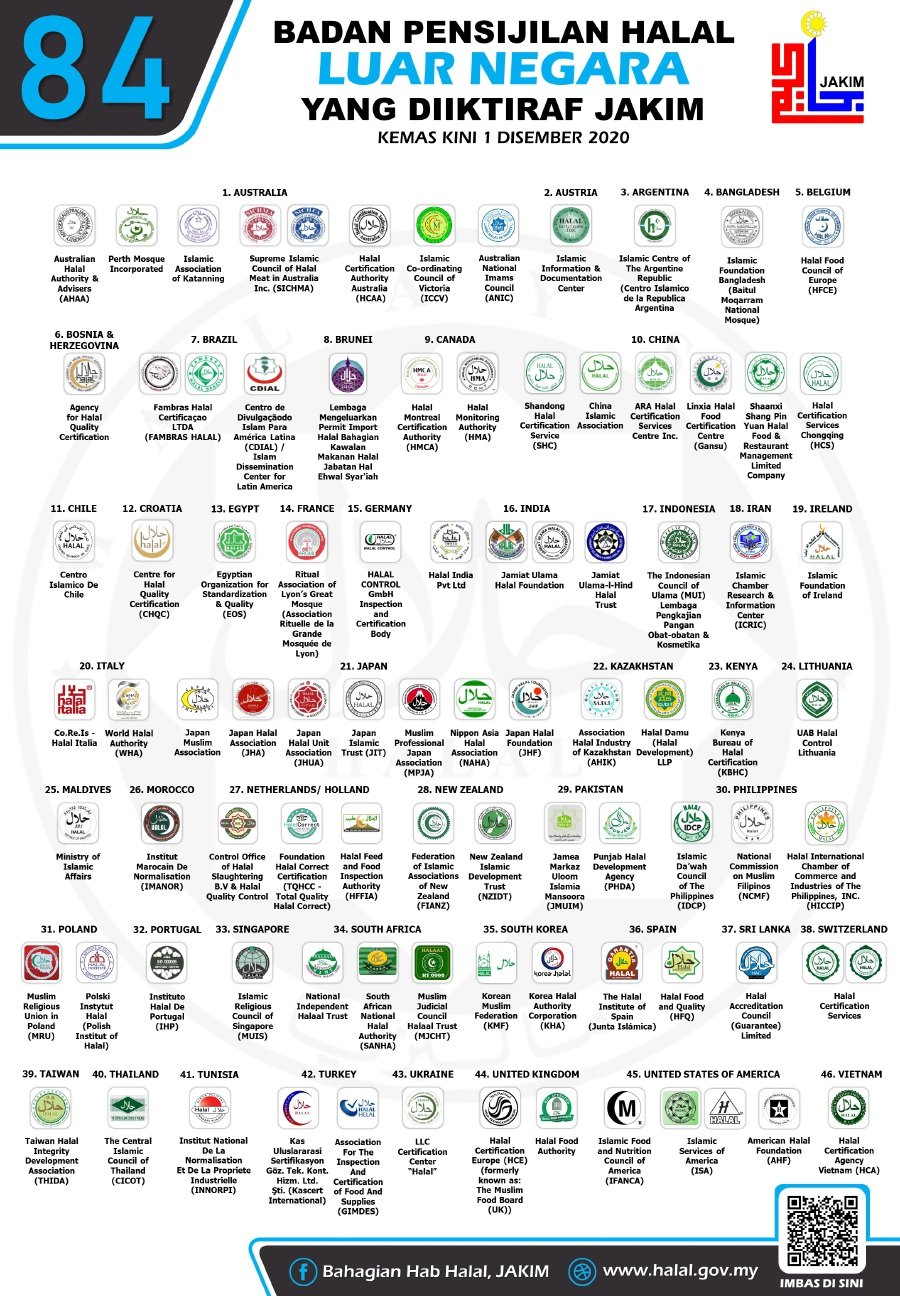
3. Eating Out: Muslim-Owned or Muslim-Friendly? Understanding the Labels
When eating out, especially in unfamiliar places, it’s common to see signs or phrases like “Muslim-owned,” “Muslim-friendly cafe,” or “No pork, no lard.” These indicators can help, but they each carry different meanings. Here’s how I personally interpret and approach them:
-
“Muslim-owned”
By default, a Muslim owner is religiously obligated to provide halal food to fellow Muslims. This assumption is often rooted in community-based trust, especially in smaller towns where customers may personally know the owner, perhaps from the same mosque or neighbourhood, which naturally builds confidence in the food’s halal status.
However, while Islam emphasises this obligation, we also recognise that a person’s inner faith (iman) is known only to Allah. In practical matters, Islam permits us to make decisions based on what is outwardly apparent. If a business owner openly contradicts Islamic teachings, for example, by publicly promoting haram practices or expressing clear disregard for halal principles, then it is only natural for a consumer to question whether the food served is truly compliant with halal standards. As consumers, we are encouraged to avoid doubtful matters (syubhah), and instead choose what brings clarity and peace of mind.
“Leave that which makes you doubt for that which does not make you doubt.”
— Hadith Hasan, Jami’ at-Tirmidhi 2518In reality, many businesses today operate under partnerships or shareholding structures, where ownership may be shared among individuals of different faiths or practices. A restaurant labelled as “Muslim-owned” may not necessarily be fully owned or fully compliant with halal standards. In Malaysia, people often assume someone is Muslim based on their name, but that is not always a reliable indicator. To be more certain, one can use the SSM (Suruhanjaya Syarikat Malaysia) business registration system to verify the ownership breakdown.
In larger towns or unfamiliar cities, this becomes even more important. We often dine outside of our own communities, where we don’t know the owners personally. In such cases, visible and clear indicators of Muslim ownership or halal status should be made available, whether through signboards, certifications, or menu declarations. Misleading consumers with vague or false claims can cause public confusion and may result in enforcement action under the KPDN (Ministry of Domestic Trade and Costs of Living).
-
“Muslim-friendly cafe”
This label can be vague and open to interpretation. Some cafes may still serve pork or alcohol, but use the term to show openness toward accommodating Muslim customers. For example, they may allow you to ask about ingredient sources or request specific cooking methods (e.g., clean utensils, no cross-contamination). It’s similar to how restaurants handle allergy-sensitive customers. After asking the necessary questions, I personally make a judgment call on whether to proceed or find another place. -
“Endorsed by Muslim Customers or Community”
In small towns or close-knit communities, it’s not always easy to distinguish between Muslim-owned and non-Muslim-owned establishments just by looking at the signage or setup—many places may appear similar from the outside. In such situations, guidance from local Muslim communities becomes especially valuable.
Sometimes, non-Muslim-owned eateries are frequented by local Muslims who personally know and trust the owner’s practices. Verbal endorsements from trusted individuals, particularly if supported by a local mosque, Islamic center, or Muslim community body, can provide meaningful assurance about the halal status of the food served.
This kind of local knowledge is also helpful when travelling abroad. In many places, mosques will display or share a list of Muslim-recommended eateries for visiting Muslim travellers. These informal endorsements, while not official certifications, are often based on long-standing relationships and community trust, which can be a practical and reliable guide when formal halal options are limited or unclear.
-
“No pork, no lard, no alcohol”
This phrase is clear, but it only covers part of what halal entails. While these three ingredients are haram, halal is more comprehensive; it includes proper slaughtering methods, ingredient sourcing, handling, and cleanliness. So, while this phrase is a good start, I personally still look deeper before making a decision. -
“Vegan” or “Kosher” options
When abroad, I sometimes consider vegan or kosher-certified food as an alternative. Vegan products avoid animal ingredients altogether, and kosher food, while following a specific set of dietary laws, perhaps shares many similarities with halal. In many cases, these certifications are overseen by recognized authorities, almost similar to how JAKIM supervises halal compliance in Malaysia. So, these can be reasonable options in situations where halal-certified food is unavailable.
Summary Chart: Understanding Halal Labels When Eating Out

Final Thought
To me, being mindful of halal is not only about following rules, but also about being spiritually responsible in how I consume and live daily. As Muslims, we are encouraged to avoid doubtful matters and make decisions with intention (niyyah), knowledge, and humility.
This personal guideline is written with sincerity, based on lived experience and continuous learning. I hope it helps others reflect on their own approaches too. May Allah guide us all to what is halal and tayyib (good and pure).