Exploring the Value of Advanced Degrees in the Age of AI and Innovation
| Navigating Postgraduate Pathways Series – (2)
As we considered in our earlier reflection, postgraduate study is far more than a stepping stone to academic titles — it’s a space where critical inquiry, creativity, and personal transformation converge. But what does this look like in a world reshaped by artificial intelligence, automation, and rapid technological acceleration?
In this post, we examine why advanced degrees still matter — and, in many cases, are more relevant than ever — in today’s innovation-driven age.
The Shifting Landscape of Knowledge and Work
We live in a time when AI can code, write essays, generate images, and even make decisions. Automation is redefining industries, and traditional roles are being augmented or replaced by intelligent systems. Understandably, this has led many to question: Is it still worth pursuing a Master’s or PhD when machines seem to be outpacing us?
The answer isn’t just a yes — it’s a thoughtful, evolving yes.
Postgraduate education is not about memorizing static knowledge. Instead, it’s about developing the ability to ask better questions, navigate ambiguity, synthesize interdisciplinary insights, and generate new understanding — especially in areas where machines still fall short: ethical reasoning, context awareness, cultural understanding, and visionary innovation.
Where Human Expertise Still Shines
Fields like artificial intelligence, multimedia systems, and interdisciplinary technology require not just technical fluency but also conceptual agility. Research in these areas often asks:
-
How do we ensure fairness, transparency, and accountability in AI systems?
-
How can immersive multimedia be used for education, cultural preservation, or behavioral change?
-
What happens when we blend neuroscience, computer vision, and human-computer interaction?
These are not problems that pre-trained models or automated systems can solve alone. They demand human insight, contextual grounding, and long-term thinking — qualities that are cultivated through advanced study and research.
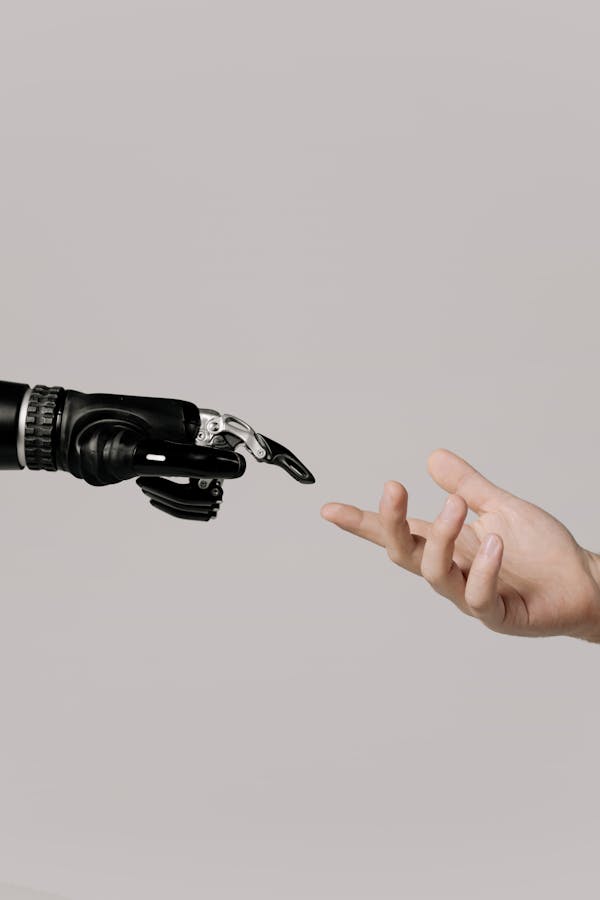
As someone actively engaged in these areas, I often see how postgraduate candidates bring unique perspectives that challenge assumptions and drive meaningful contributions — whether in academic projects, applied innovations, or industry collaborations.
Postgraduate Study as a Laboratory for Innovation
The postgraduate journey offers a rare kind of intellectual freedom: the time and space to explore a topic deeply, test ideas rigorously, and build something original. In a fast-moving world, this slower, more deliberate process is not a luxury — it’s a necessity.

Many transformative innovations — from deep learning frameworks to interactive media installations — have roots in academic research labs, theses, and collaborations. Even when these ideas migrate to startups or corporations, the intellectual seeds are often planted in universities.
Advanced degrees also equip researchers to critically engage with new technologies rather than passively accept them. For instance, rather than simply applying AI tools, a well-trained postgraduate can ask: What assumptions is this model based on? What data biases might be present? How can we make this system more explainable or inclusive?

Global Relevance, Local Impact
For Malaysian and international students alike, postgraduate research opens doors to contribute both globally and locally. Whether it’s applying machine learning to agricultural monitoring, developing culturally grounded educational apps, or analyzing the digital divide in rural communities, advanced study empowers researchers to address context-specific problems with cutting-edge tools.

This is especially true in interdisciplinary projects — a growing focus in my own work — where collaboration across fields leads to more robust, impactful outcomes.
In Closing: Education That Evolves with You
While the world races ahead with new technologies, advanced degrees offer something equally powerful: the ability to evolve with insight, purpose, and depth.
Pursuing postgraduate study today is not about resisting change — it’s about becoming the kind of thinker and creator who can shape it.
If these ideas resonate with you — whether you’re a recent graduate, an industry professional, or simply curious about contributing more deeply to your field — the next post in this series will explore how to navigate the balance between real-world industry experience and academic research.